Septic Installation & Repair Contrator
New system installs, drain field replacements, tank repairs, and emergency service — designed for your property's specific soil conditions and county requirements.
Septic systems designed around your soil
Every septic installation starts with a soil evaluation. Perc rates, soil horizons, seasonal water tables, and lot setbacks all determine how your system needs to be designed before a shovel hits the ground. We complete the evaluation, handle permit submissions to the county health department, and manage installation from tank set through drain field and final grade.
Get your free septic assessment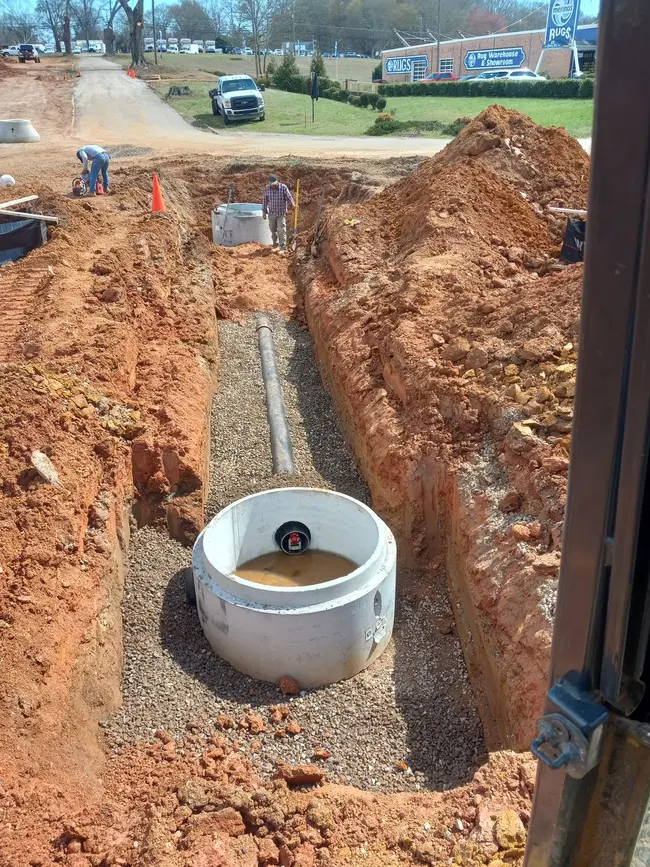
Signs your septic system needs attention
Most septic problems give you warning before they become emergencies. Knowing what to look for can mean the difference between a repair and a full system replacement.

Slow or clogged drains
When multiple fixtures in your home drain slowly at the same time, the problem is usually not a clogged pipe — it is a septic system that is overdue for pumping or a drain field that is beginning to fail.

Foul odors
Sewage odors inside the house or near the tank and drain field area are a sign that gases are escaping where they should not be. A functioning system contains odors. When they surface, something has failed.

Standing water
Unusually green grass or soggy ground over the drain field means effluent is surfacing rather than absorbing. This indicates drain field saturation and often requires field replacement, not just pumping.

Sewage backup
Raw sewage backing up into toilets, tubs, or floor drains is an emergency. Do not run water or flush until we assess the system. Backups usually mean a full tank, a blocked line, or a failed drain field.
Everything on Every Install and Repair
From soil testing through final inspection, we manage every phase in-house with licensed crews and no handoffs between contractors.

Septic system design and installation
We evaluate perc rates, soil horizons, depth to seasonally saturated zones, and setback requirements before recommending a system design. A system designed around real soil data performs reliably for decades.

Drain field installation and replacement
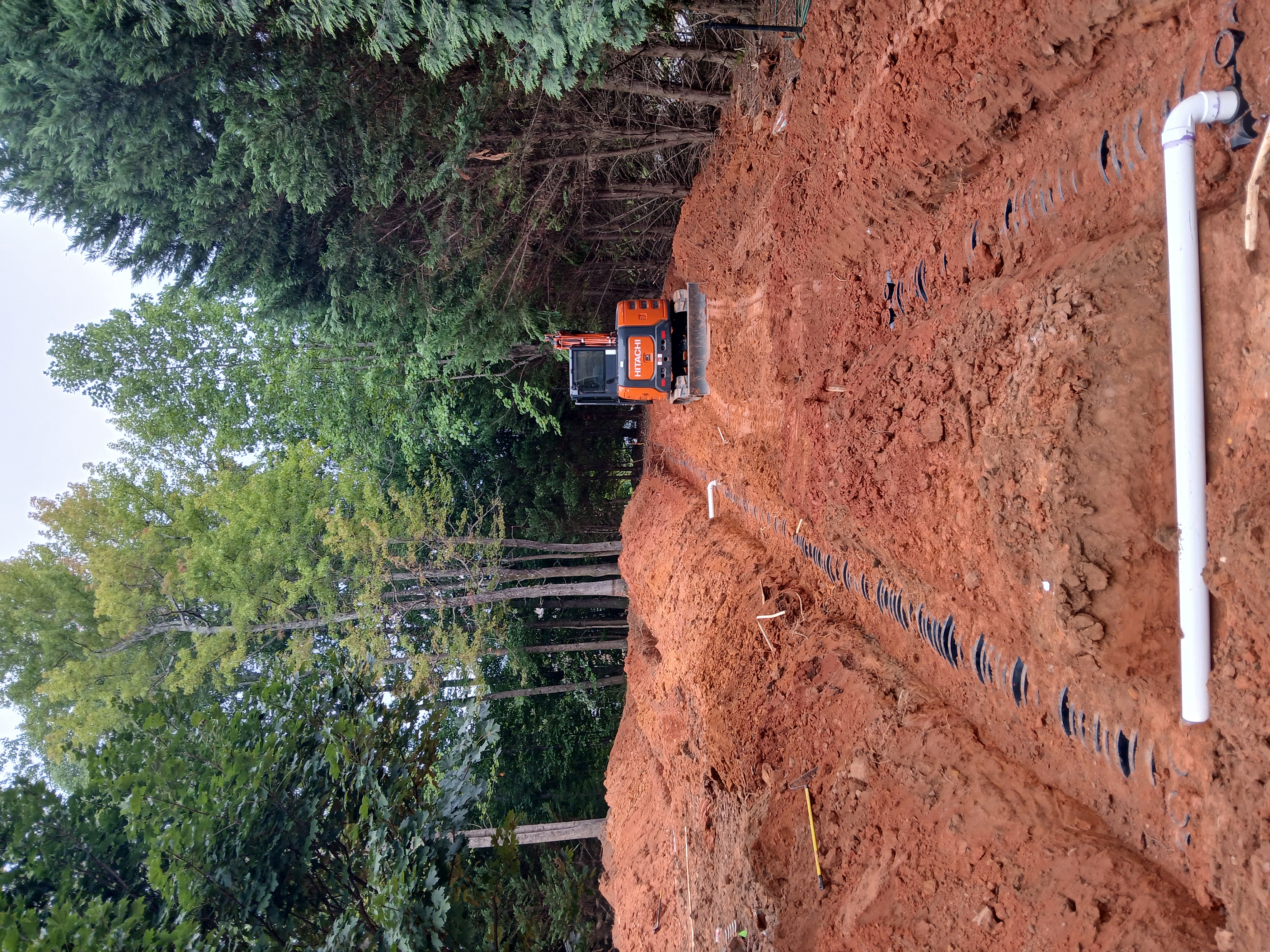
Drain fields are installed in gravel-and-pipe or chamber configurations based on your soil evaluation results. When an existing field has failed, we remove and replace the absorption area to current county health department spec.

Tank repair and replacement
We repair and replace concrete, poly, and fiberglass tanks. Cracked tanks, failed baffles, and deteriorated inlet and outlet fittings are diagnosed on-site. Every repaired or replaced tank is tested before backfill.

Pumping and routine maintenance
Regular pumping prevents solids buildup that leads to drain field failure. We pump tanks, inspect baffles and risers, and note anything that needs attention — so minor issues get addressed before they become system failures.

Inspection and system evaluation
We perform full system evaluations for pre-purchase inspections, permit compliance, and county health department requirements. Written reports are provided for real estate transactions and permit submissions.
Residential Septic Installation & Repair
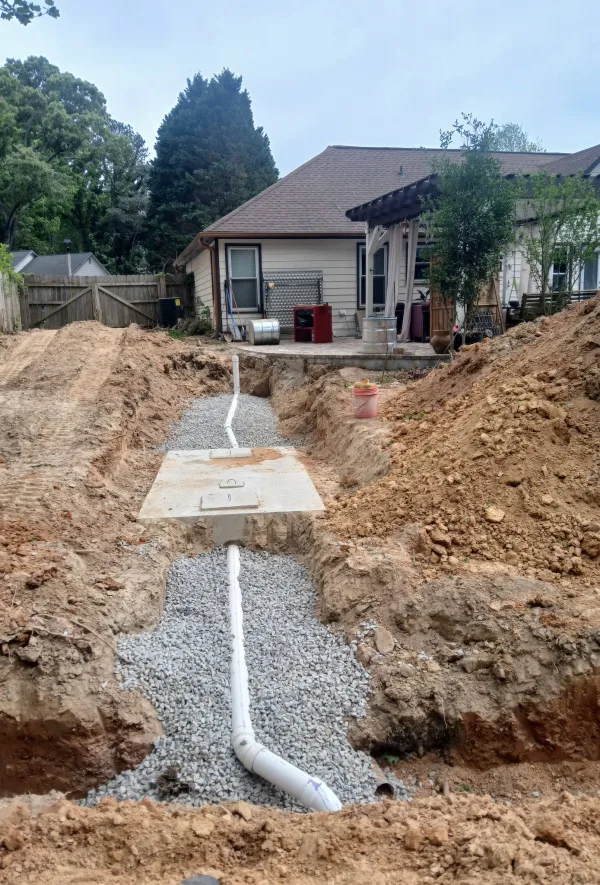
Whether you are installing a new system on a building lot or replacing a failing drain field on an existing property, the process starts with a proper soil evaluation. Soil type, depth to restrictive horizons, and lot configuration all affect what system your county will approve and how it needs to be installed.
We manage the full scope — soil evaluation, permit drawings, county health department submission, installation, and inspection — as a single project with one point of contact.

New construction
New construction in Jackson, Hall, Banks, White, and Habersham Counties requires a licensed soil classifier to evaluate your lot before any permits can be pulled. We handle the evaluation, design the system around your soil profile, and submit the permit package to the county health department.

System replacement
Failing drain fields, cracked tanks, and saturated absorption areas are common on properties with aging systems. We diagnose the specific failure point, remove or remediate what failed, and install a replacement system designed to current county code and your property's current soil conditions.
Pre-purchase inspections
Before closing on a property with an existing septic system, you need to know the condition of the tank, baffles, and drain field. We perform full system evaluations and provide written reports for use in real estate transactions across North Georgia.
Commercial Septic for Restaurants, Retail, and Developments
Commercial properties generate higher wastewater volumes than residential systems and require systems designed for sustained peak loads. We install and service septic systems for restaurants, retail centers, office parks, and multi-unit residential developments across North Georgia.
Capacity analysis on every commercial project
Every commercial installation includes a flow analysis to size the system for current and anticipated demand — not just the minimum required to pass inspection.
Schedule your commercial assessment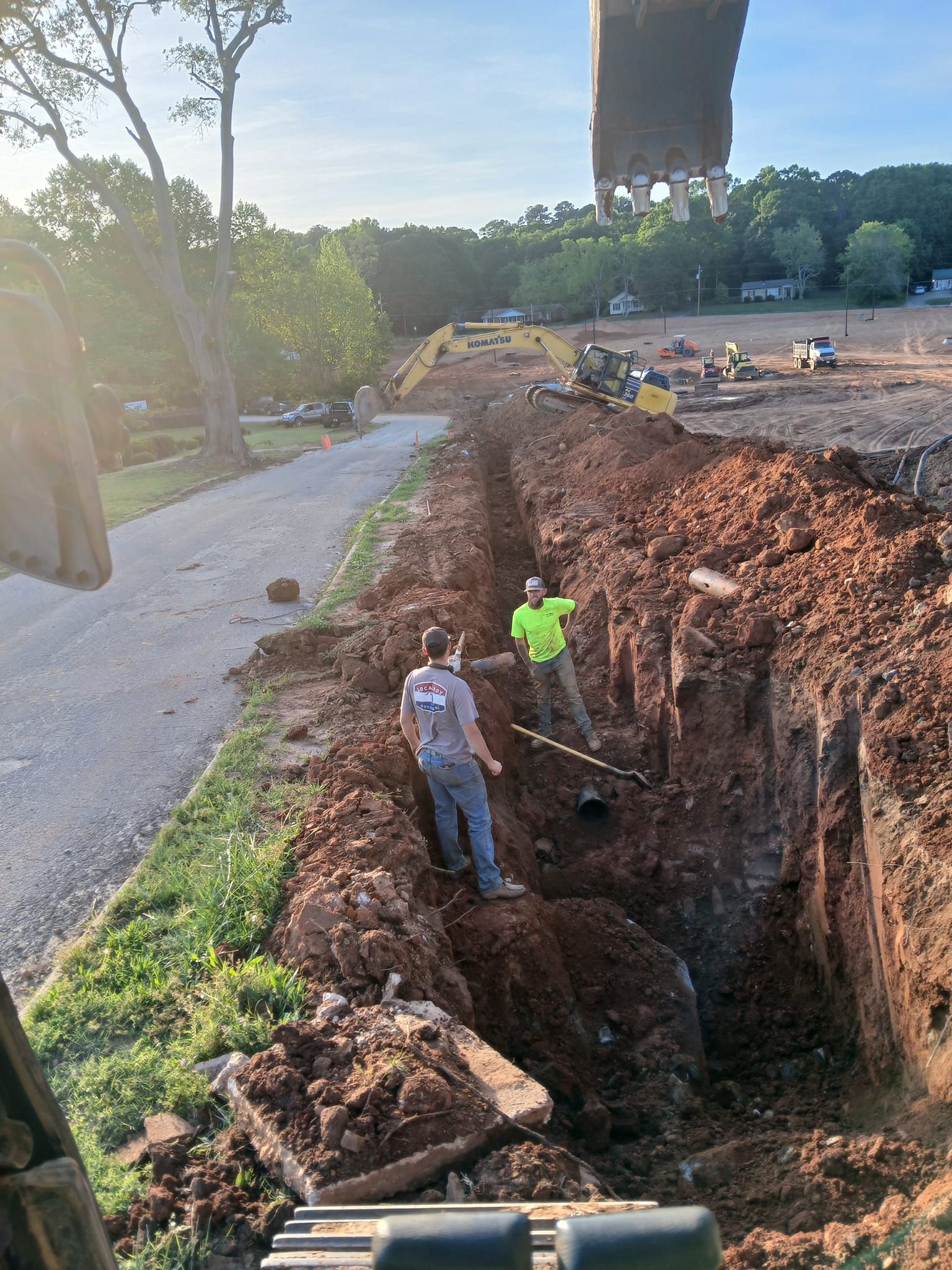
What to expect before you start
These are the questions property owners and builders ask most often before starting a septic installation or repair project in North Georgia.
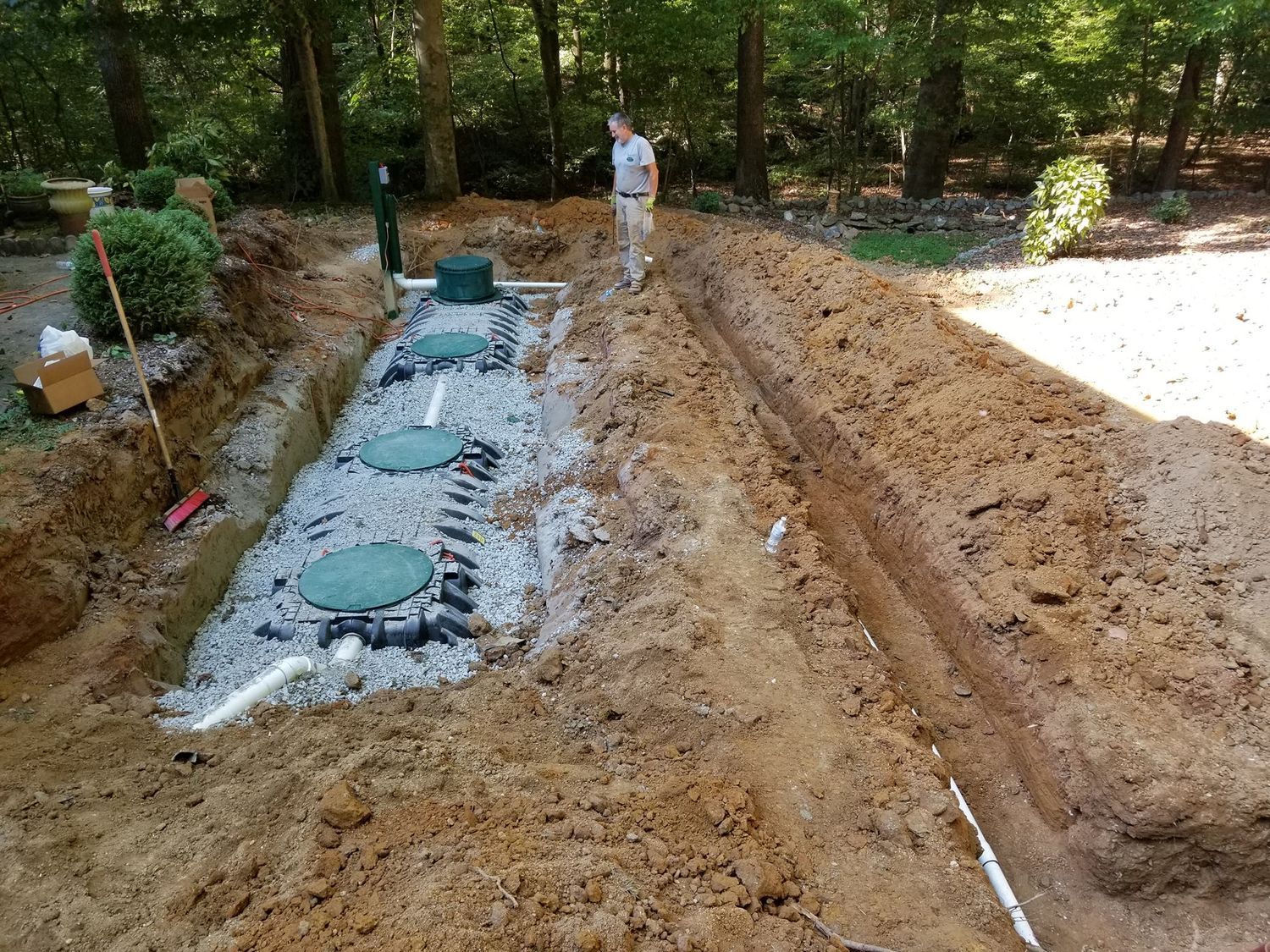
Call today for your septic installation or repair service
Whether you are installing on a new lot, dealing with a system showing signs of failure, or need an evaluation before a real estate transaction, contact us to schedule your assessment and get a written quote built on your property's actual conditions.
Schedule your septic assessment